

You can take the LSAT five times in the current reportable score period, which runs from July 2021, and seven times in your lifetime. If you’ve read that retakes are unlimited, that guide is out of date (an earlier version of this one included). LSAC brought back limits with the September 2019 test. Here are the rules, what counts, what law schools see, and how to decide whether a retake is worth it.
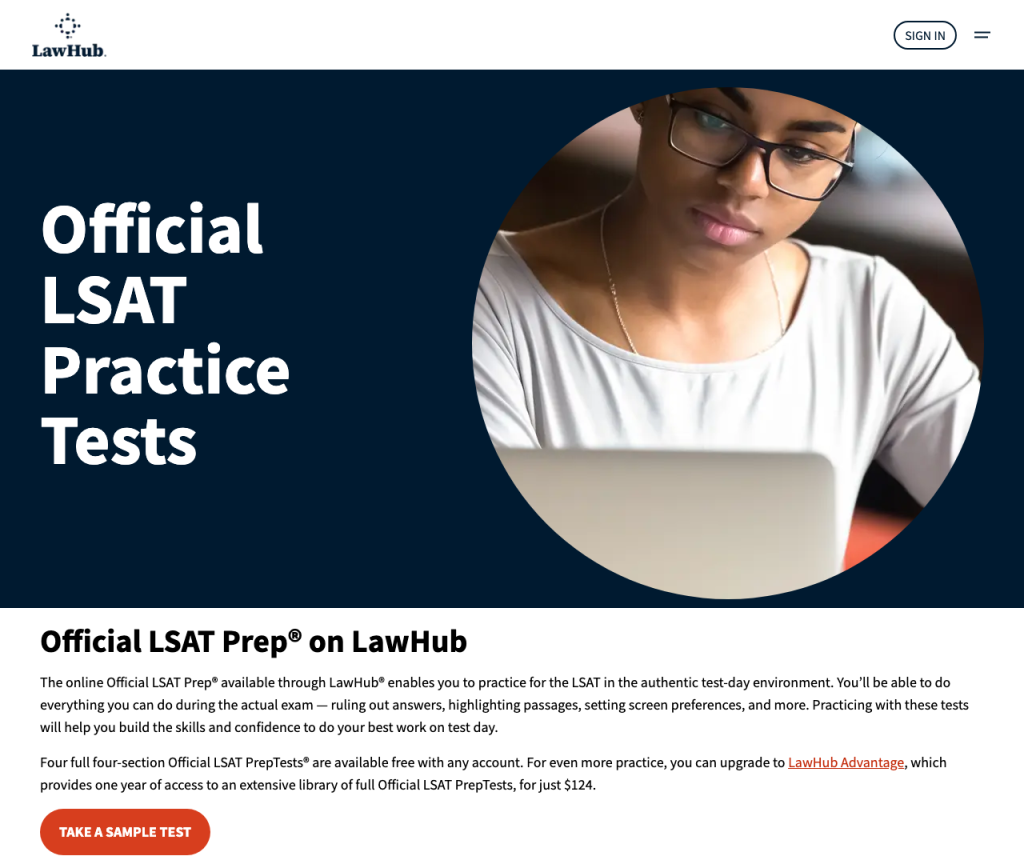
Planning a retake? Start with our LSAT practice tests guide.
LSAT Retake Limits for 2026–27
These are LSAC’s limits on repeating the test:
- Five tests in the current reportable score period (since July 2021).
- Seven tests in your lifetime.
- No retakes after a 180. If you’ve scored a perfect 180 in the reportable period, you can’t take the test again.
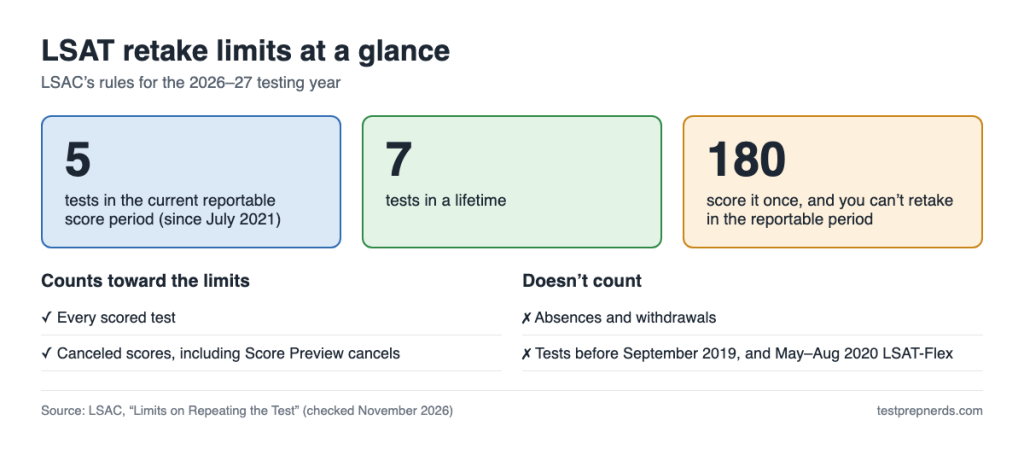
What counts toward the limits
| Counts | Doesn’t count |
|---|---|
| Every scored test | Absences (you registered but didn’t test) |
| Canceled scores, including cancels through Score Preview | Withdrawals before test day |
| Tests before September 2019 and the May–August 2020 LSAT-Flex |
If you have a serious, extenuating reason to test beyond a limit, you can appeal by emailing TTL@LSAC.org at least five business days before the registration deadline for the test you want. LSAC decides within five business days, and the decision is final. An exemption from one limit doesn’t lift the other.
What Law Schools See When You Retake
Your LSAT score report goes to every school you apply to. It includes every reportable score from the current testing year and the previous five, up to 12 tests, plus any cancellations and absences, along with a percentile and score band for each score.
How schools use multiple scores varies. LSAC tells schools that your average score is the best predictor of how you’ll do, but some schools put more weight on your highest score. Ask the schools on your list how they treat repeat scores before you plan around either one.
Is Retaking the LSAT Worth It?
Often, yes. According to LSAC’s retake guidance, test takers who take a second test in the same testing year score 2 to 3 points higher on average. That’s an average: some people gain much more, and some score the same or lower. What separates them is usually whether they changed how they prepared.
A retake is most likely to pay off if:
- your practice test scores were clearly higher than your real score,
- something went wrong on test day (illness, a scheduling problem, nerves you can now plan for), or
- you didn’t study much the first time and can now commit a few months to it.
If your score matched your practice tests, plan to change your approach before you register again. Take full timed practice tests, review every miss, and put most of your time into Logical Reasoning, which is two of the three scored sections.
How to Protect Yourself on a Retake
- Buy LSAT Score Preview. For $46 before testing starts (or $87 after), you see your score first and get six days to keep or cancel it. A canceled score still counts toward your limits, but schools don’t see the number.
- Or cancel within six days. Without Score Preview, you can cancel your score within six calendar days of your test date, before you see it.
- Withdraw rather than skip. If you aren’t ready, withdraw by 11:59 p.m. ET the night before your test. A withdrawal doesn’t count toward the limits and keeps an absence off your report.
What a Retake Costs
Each retake costs the same as a first test: $253 for the 2026–27 testing year, per LSAC’s fee page. If you have an approved LSAC fee waiver, a Tier 1 waiver covers up to two LSATs in the two-year waiver period; a Tier 2 waiver doesn’t cover a retake.
Retaking After June 2027
Starting with the August 2027 LSAT, the test moves to a new three-section format: Reading Comprehension first, then two Logical Reasoning sections, with the unscored questions mixed into each one instead of a separate experimental section. The scored question types and the 120–180 scale don’t change, but if your retake is in August 2027 or later, practice with the new-format tests LSAC is adding to LawHub in February 2027. More in our guide to the LSAT experimental section.
How Many Times Can You Take the LSAT? FAQ
How many times can you take the LSAT?
Five times in the current reportable score period (since July 2021) and seven times in your lifetime. Tests taken before September 2019 don’t count toward either limit.
Do canceled LSAT scores count toward the limit?
Yes. Canceled scores count, including scores you cancel through LSAT Score Preview. Absences and withdrawals don’t count.
Do law schools see all my LSAT scores?
Schools get every reportable score from the current testing year and the previous five, plus any cancellations and absences. LSAC tells schools your average is the best predictor, but some schools weigh your highest score more. Ask the schools you’re applying to.
Can I retake the LSAT after scoring 180?
No. If you’ve scored a 180 in the current reportable period, LSAC won’t let you take it again.
How much does an LSAT retake cost?
The same as a first test: $253 for the 2026–27 testing year. A Tier 1 LSAC fee waiver covers up to two LSATs in the two-year waiver period; a Tier 2 waiver doesn’t cover a retake.
Next Steps
Pick a date with time to prepare: see the LSAT test dates and our guide to when to take the LSAT. Then build a plan with the LSAT study schedule, free LSAT prep, or one of the best LSAT prep courses.